




Thixomolding Explained: Semi-Solid Magnesium Moulding Compared with Die Casting
Most magnesium die castings start in a crucible full of molten metal under cover gas. Thixomolding takes a different route: solid magnesium chips are fed into a heated barrel, a screw turns them into a semi-solid slurry, and the slurry is injected into a steel die – much like plastic injection moulding. For process engineers and buyers the question is when this route is the better choice.
What Is Thixomolding?
Thixomolding is the injection moulding of magnesium alloys in a semi-solid, thixotropic state. Magnesium alloy chips are heated in the barrel of a moulding machine and injected into the die without contact with the atmosphere; there is no melting furnace.
Thixotropy means that a semi-solid alloy becomes less viscous and flows more easily when shear breaks its solid phase into rounded particles. The rotating screw supplies this shear. The main competitor is hot-chamber magnesium die casting.
How the Thixomolding Process Works
A Thixomolding machine looks like a large plastic injection moulding machine: a clamping unit holds the die, and an injection unit with barrel and screw prepares the material. Dow Chemical developed the process in the 1980s by adapting a plastic extruder; the patent went to Thixomat Inc. in 1990, which licensed it to machine builders including Japan Steel Works (JSW) and Husky.
Feeding the Chips
Magnesium alloy chips of a few millimetres are dosed into the barrel. The feed area and barrel are kept under an inert gas, typically argon, to keep air out.
Heating and Shearing
Heater zones bring the chips into the range between solidus and liquidus. The rotating screw conveys and shears the material so that the remaining solid phase becomes globular.
Accumulating the Shot
The semi-solid slurry collects in front of the screw tip until the shot volume is reached.
Injection
The screw moves forward like a piston and injects the slurry at high speed into the closed die, where the part solidifies.
How Semi-Solid Magnesium Behaves
Between solidus and liquidus a magnesium alloy consists of solid primary crystals (α-Mg) and remaining liquid. If it cools without movement, the crystals grow in branched (dendritic) form and build a network – the material would be stiff and barely flow. The shear of the rotating screw prevents this network: it breaks up dendrites and rounds the solid particles. The suspension then behaves in a shear-thinning way: under shear its viscosity drops, at rest it rises again.
Die Filling
The slurry is more viscous than a fully liquid melt. Filling is less turbulent and less air is entrapped.
Less Shrinkage
Part of the material is already solid on injection. Only the remaining liquid solidifies in the die – shrinkage and thermal load on the die decrease.
Globular Particles
Typical are globular α-Mg particles surrounded by a eutectic network containing β-Mg17Al12 (Patel et al. 2010). Solid fraction and particle size shape strength and ductility.
This leads to the most important control variable of the process: the barrel temperature profile. It determines how much of the alloy is solid at injection – and therefore flowability, microstructure and part properties.
The Thixomolding Process Window: Temperature and Solid Fraction
In Thixomolding, the barrel temperature profile sets how much of the alloy is still solid at injection. For the common alloy AZ91D, a Husky patent gives a solidus of 468 °C and a liquidus of 598 °C. JSW states that its screw and barrel material is designed for continuous operation at 630 °C (manufacturer statement).
The same patent describes conventional semi-solid injection moulding as working with roughly 5–60 % solids, in practice about 5–10 % for thin-walled and 25–30 % for thick-walled parts, before claiming a high-solids variant. These values describe one source’s view of practice, not a universal recipe.
Process Requirements for Thixomolding
Thixomolding moves melt preparation into the machine. Process reliability and part quality therefore depend heavily on feedstock, barrel and peripherals:
| Area | Requirement | Why |
|---|---|---|
| Feedstock | Chips of the specified alloy, defined size, stored dry and clean | Moisture, oxides and foreign material cause defects in the part and raise the fire risk |
| Inert gas | Reliable argon supply for feed throat and barrel | Prevents contact between hot magnesium and atmospheric oxygen |
| Barrel and screw | Several controlled heating zones, materials for continuous operation around 600 °C | The temperature profile sets the solid fraction; wear changes conveying and shot volume |
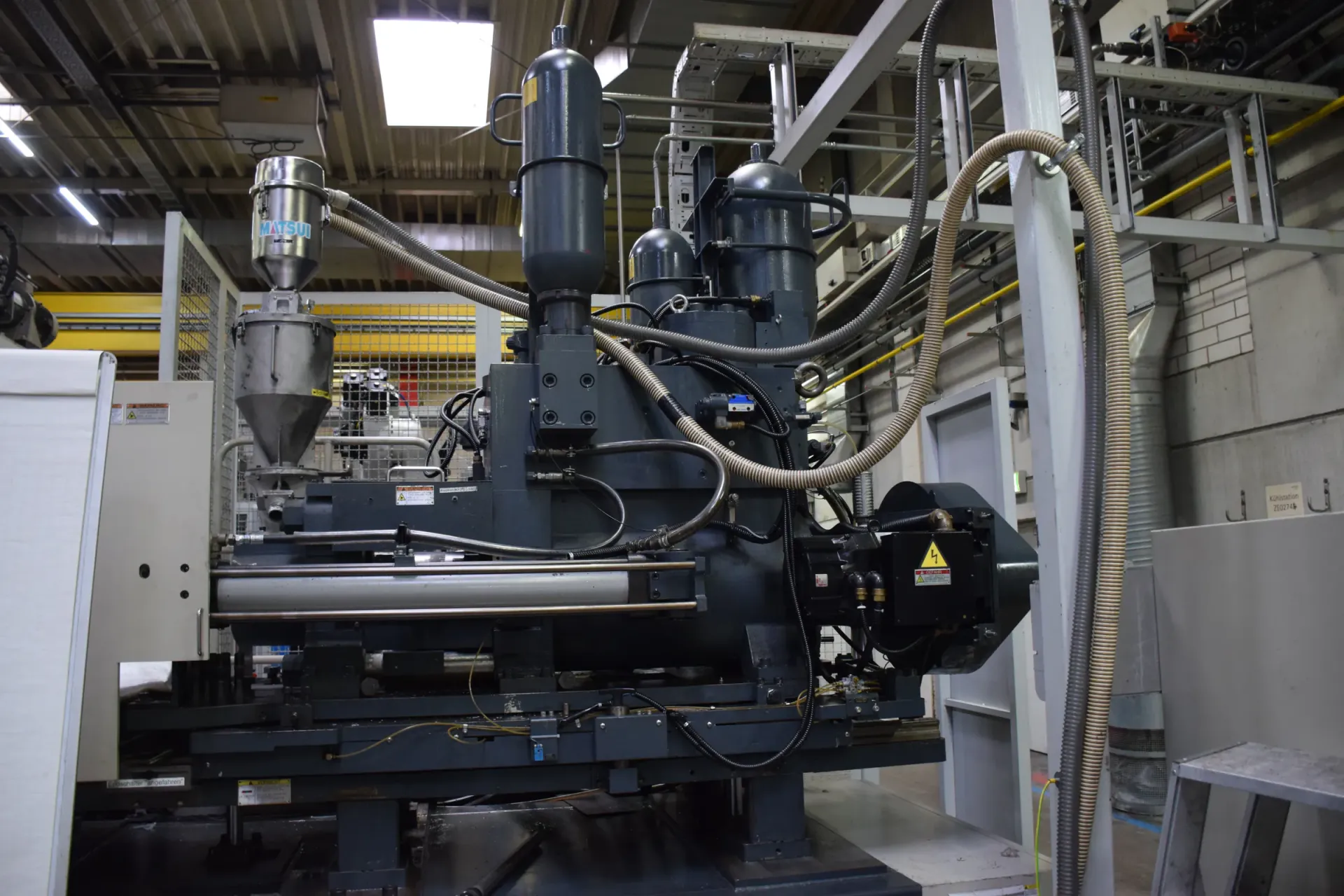
| Injection unit | Hydraulic accumulators and fast valves for high injection speed | Thin walls must be filled before the slurry solidifies |
| Die and temperature control | Controlled, stable die temperature, suitable gate and overflow design | Die temperature and gating determine flow length, surface and distortion |
| Peripherals | Die spraying, extraction, trimming, separate collection of returns by alloy | Returns are recycled externally, not in the machine |
The basics of die temperature and temperature control units are covered in Temperature Control in Die Casting; how accumulators and servo valves shape injection is explained in Hydraulics of Die Casting Machines.
Thixomolding vs Hot-Chamber Magnesium Die Casting
Hot-chamber die casting holds magnesium as a liquid melt; the shot system sits in or next to the bath. How hot and cold chamber machines differ is explained in Cold Chamber or Hot Chamber?, the shot system itself in Gooseneck, Nozzle and Plunger.
| Criterion | Thixomolding | Hot-Chamber Magnesium Die Casting |
|---|---|---|
| Feedstock | Magnesium alloy chips | Ingots and returns melted in a furnace |
| Melt handling | No melting furnace; small material volume in the barrel | Permanent liquid melt in crucible furnace |
| Protection | Inert gas (argon) in feeder and barrel | Cover gas over the melt surface |
| Alloy change | Relatively easy (JSW) | Furnace must be emptied or changed |
| Porosity and distortion | Less turbulent flow; lower shrinkage and porosity reported | Depends on venting, vacuum and process control |
| Thin walls | Suited to thin-walled, precise parts (JSW) | Magnesium fills thin sections well |
| Scrap and returns | Requires clean returns and an external recycling route | Clean returns can be remelted if melt treatment allows |
JSW attributes better surface quality to high injection pressure and speed, and better dimensional accuracy and mechanical properties to the lower processing temperature (manufacturer statement). Light Metal Age reports less shrinkage, porosity and die wear than in high-pressure die casting. Porosity mechanisms are covered in Die Casting Defects Explained.
Cover Gas, SF6 and Safety with Magnesium
Molten magnesium oxidises and can burn, so hot-chamber die casting needs a cover gas over the melt. According to the US EPA, dilute SF6 has been widely used for this, and SF6 traps infrared radiation 22,800 times more effectively than CO2 over 100 years. Alternatives include blends with HFC-134a and fluoroketones; older options were salt fluxes and SO2.
Thixomolding avoids an open melt: JSW states that its machines need no SF6 and no flame-retardant gas, because there is no melting furnace (manufacturer statement). Argon for the barrel is still required. Which cover gases are permitted for a die casting plant depends on current environmental rules; the material basics are in Aluminium, Zinc or Magnesium?
Other Semi-Solid Metal Processing Routes
Thixomolding is one of several semi-solid metal processing routes. The others differ mainly in where the semi-solid material comes from.
Reheated Billets
Billets with a non-dendritic structure are reheated, usually by induction, and pressed into the die. The special billets make the route expensive.
Slurry from the Melt
The semi-solid slurry is produced directly from liquid metal, which allows standard feedstock and in-house returns.
Screw Plus Die Casting Unit
Newer concepts separate the slurry-forming screw from injection and use the piston of a cold-chamber die casting machine. They are still at an early stage.
Typical Applications, Alloys and Quality Aspects
Thixomolding plays to its strengths with thin-walled, dimensionally accurate magnesium parts where low porosity and a good surface matter. Manufacturers and the trade press mainly cite:
- Housings and frames for consumer electronics, for example portable devices
- Frames for vehicle displays and interior parts (JSW)
- Lightweight parts for electric vehicles (Light Metal Age)
Alloys
Magnesium-aluminium alloys such as AZ91D and AM60B are common. Patel et al. (2010) found more α-Mg and less β-Mg17Al12 in thixomolded AM60B than in AZ91D – with a lower yield strength but higher ductility. Alloy choice therefore follows the same logic as in die casting: AZ91D for strength, AM alloys for ductility.
Checking Quality
- Porosity and filling by X-ray or CT – see X-Ray and CT Inspection of Die Castings
- Microstructure and solid fraction by metallography on sample parts
- Dimensional accuracy and distortion, especially on large, flat parts
- Surface and corrosion protection: magnesium parts usually receive a conversion coating or paint
Advantages, Limits and Economic Assessment
What Speaks for Thixomolding
No melting furnace and no open melt, no cover gas over a bath surface, easy alloy changes, lower porosity and shrinkage, thin walls and good surfaces (manufacturer and trade press statements).
What Speaks Against It
Chips as a processed feedstock instead of ingots, argon consumption, expensive wear parts (screw, barrel, check ring), external recycling route for returns, limited choice of machines and suppliers, practically limited to magnesium.
Whether thixomolding pays off is decided by a part cost calculation for each component, not by a general process comparison. The calculation should include:
- Material price per kg of chips compared with ingots and in-house returns
- Yield: casting weight relative to shot weight, return rate and its value
- Energy: barrel heating instead of a melting and holding furnace that also consumes energy during breaks
- Protective gas: argon versus the cover gas and extraction systems of hot-chamber operation
- Wear and maintenance of screw, barrel and nozzle
- Scrap, rework and inspection effort compared with die casting
How shot weight and yield are calculated is shown in Shot Weight and Injection Capacity in Die Casting.
Thixomolding Machines and Suppliers
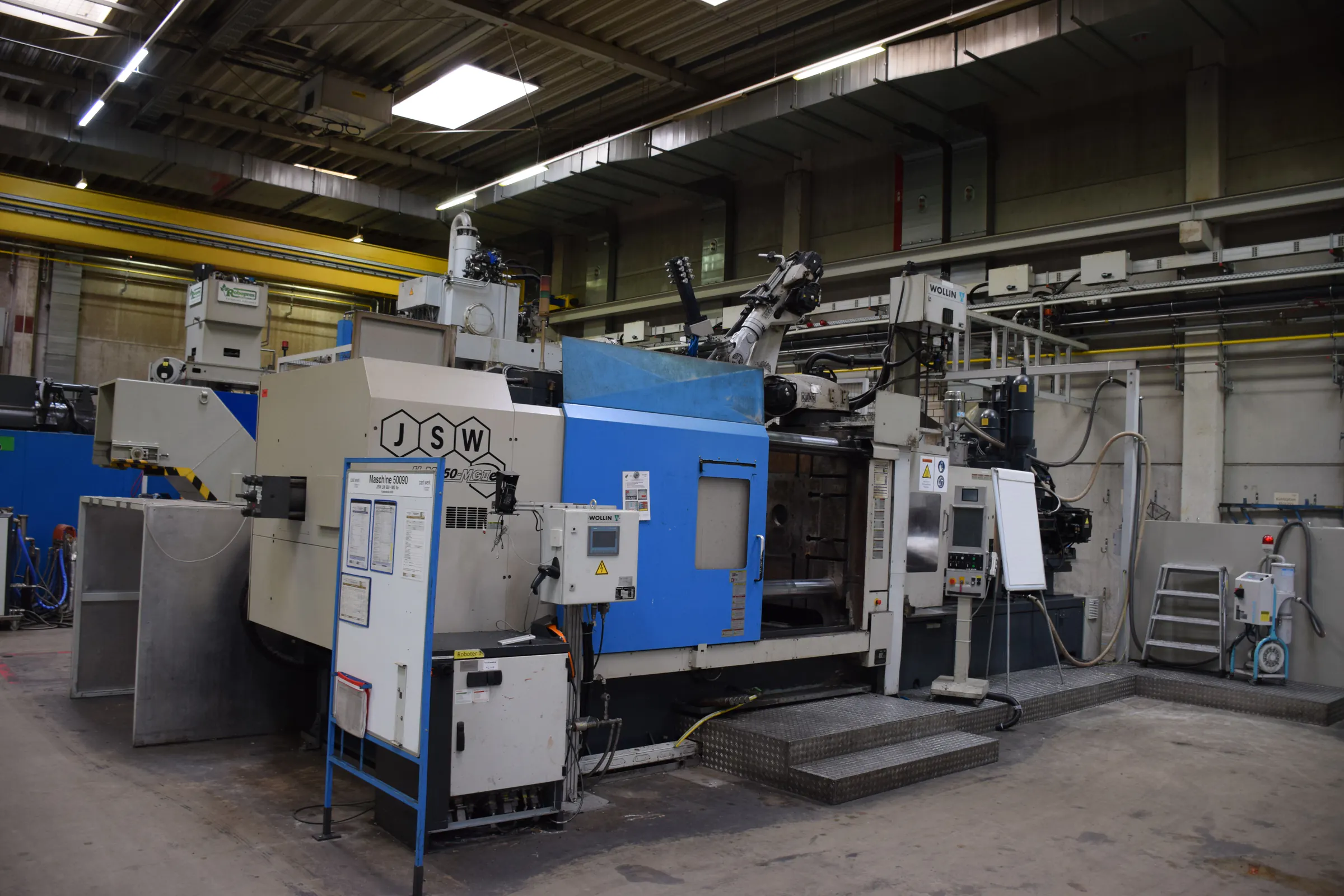
JSW is the best-known builder of Thixomolding machines. On its website (accessed 6 November 2026), the third-generation JLM-MGIIe series comprises the JLM280-MGIIe, JLM650-MGIIe, JLM850-MGIIe, JLM1300-MGIIeL, JLM1800-MGIIeL and JLM3000-MGIIeL. JSW states a maximum injection speed of 5 m/s in dry operation (manufacturer statement).
In May 2026, JSW announced the JLM1800-MGIIeL with 17,700 kN clamping force and a maximum shot weight of over 5 kg; the JLM3000-MGIIeL with 3,000 tons (29,400 kN) was launched in December 2022. JSW names frames for in-vehicle displays and consumer electronics parts as typical applications (manufacturer statements). FISS has listed used JSW Thixomolding machines in the past; see the JSW manufacturer page.
Checking a Used Thixomolding Machine
A used Thixomolding machine combines the clamping unit of an injection moulding machine with a hot, highly loaded injection unit. Besides the general points in the technical checklist for used die casting machines, these checks are specific:
- Condition, wear and service history of screw, barrel, check ring and nozzle
- Heater zones, thermocouples and temperature control of the barrel
- Argon supply, feeder and chip dosing system
- Injection unit: accumulator, valves and achieved injection speed
- Control generation, software and spare-parts availability from the manufacturer
- Shot counter, maintenance records and the alloys used
- Fire protection and chip storage at the new site
Screw and barrel are expensive wear parts; a quotation for replacement should be part of the calculation. Where possible, a test run with a known die shows more than a datasheet.
When Thixomolding Is the Better Route
Thixomolding suits thin-walled, precise magnesium parts where a plant wants to avoid an open melt and cover gas. Hot-chamber die casting remains the established route for many magnesium parts, with standard ingots and in-house melt handling. The decision depends on part size, alloy, quality requirements, feedstock costs and the existing infrastructure.
Questions About Thixomolding
Is Thixomolding the Same as Magnesium Die Casting?
No. In die casting, magnesium is melted in a furnace and injected as a liquid. In Thixomolding, magnesium chips are heated in a screw barrel and injected as a semi-solid slurry, without a melting furnace.
Can Aluminium Be Thixomolded?
Thixomolding is practically used for magnesium alloys. According to Light Metal Age, molten aluminium reacts with steel and would attack the screw, which is why magnesium is preferred.
Does Thixomolding Need Cover Gas?
Thixomolding does not need a cover gas over an open melt, because there is no melting furnace. The barrel is protected with an inert gas, typically argon.
Who Builds Thixomolding Machines?
JSW (Japan Steel Works) is the best-known builder, with the JLM-MGIIe series. Husky also licensed the technology, and newer semi-solid concepts based on die casting machines have appeared.
Which magnesium alloys are processed by thixomolding?
AZ91D and AM60B are common. AZ91D offers higher strength, AM60B more ductility because it contains more α-Mg and less β phase. Which other alloys a machine can process is specified by the machine manufacturer.
Is thixomolding more economical than magnesium die casting?
That depends on the part. Thixomolding saves the melting furnace and the cover gas over the melt but requires chips, argon and expensive wear parts. A part cost calculation covering material, yield, energy, wear and scrap shows which route is cheaper.
Used Hot-Chamber and Magnesium Machines from FISS.
Whether hot-chamber die casting or Thixomolding: FISS supplies used machines and helps you compare options for your magnesium parts.
Sources
The Japan Steel Works, Ltd.: Magnesium injection molding machine (product page: What is THIXOMOLDING?, features, lineup), jsw.co.jp, accessed 6 November 2026.
The Japan Steel Works, Ltd.: Launch of the JLM1800-MGIIeL: A High-Capacity Magnesium Injection Molding Machine, press release, May 2026; and Launch of JLM3000-MGIIeL ultra large size magnesium injection molding machine, 2023, accessed 6 November 2026.
F. Czerwinski, D. Kadak (Husky Injection Molding Systems): Process for injection molding semi-solid alloys, US Patent 7,469,738 B2, 2008.
M. Zirps: How Thixomolding is Redefining Electric Vehicle Production, Light Metal Age, January 2024, accessed 6 November 2026.
US EPA: Magnesium Industry – SF6 Emission Reduction Partnership, epa.gov, accessed 6 November 2026.
Wikipedia: Semi-solid metal casting (overview of thixocasting and rheocasting), accessed 6 November 2026.
FISS Machines: Aluminium, Zinc or Magnesium? and Cold Chamber or Hot Chamber?, fiss-machines.com, accessed 6 November 2026.
H. A. Patel, D. L. Chen, S. D. Bhole, K. Sadayappan: Microstructure and tensile properties of thixomolded magnesium alloys, Journal of Alloys and Compounds 496 (2010), pp. 140–148.
FISS Machines: Temperature Control in Die Casting, Hydraulics of Die Casting Machines, X-Ray and CT Inspection of Die Castings, Shot Weight and Injection Capacity, fiss-machines.com, accessed 19 November 2026.
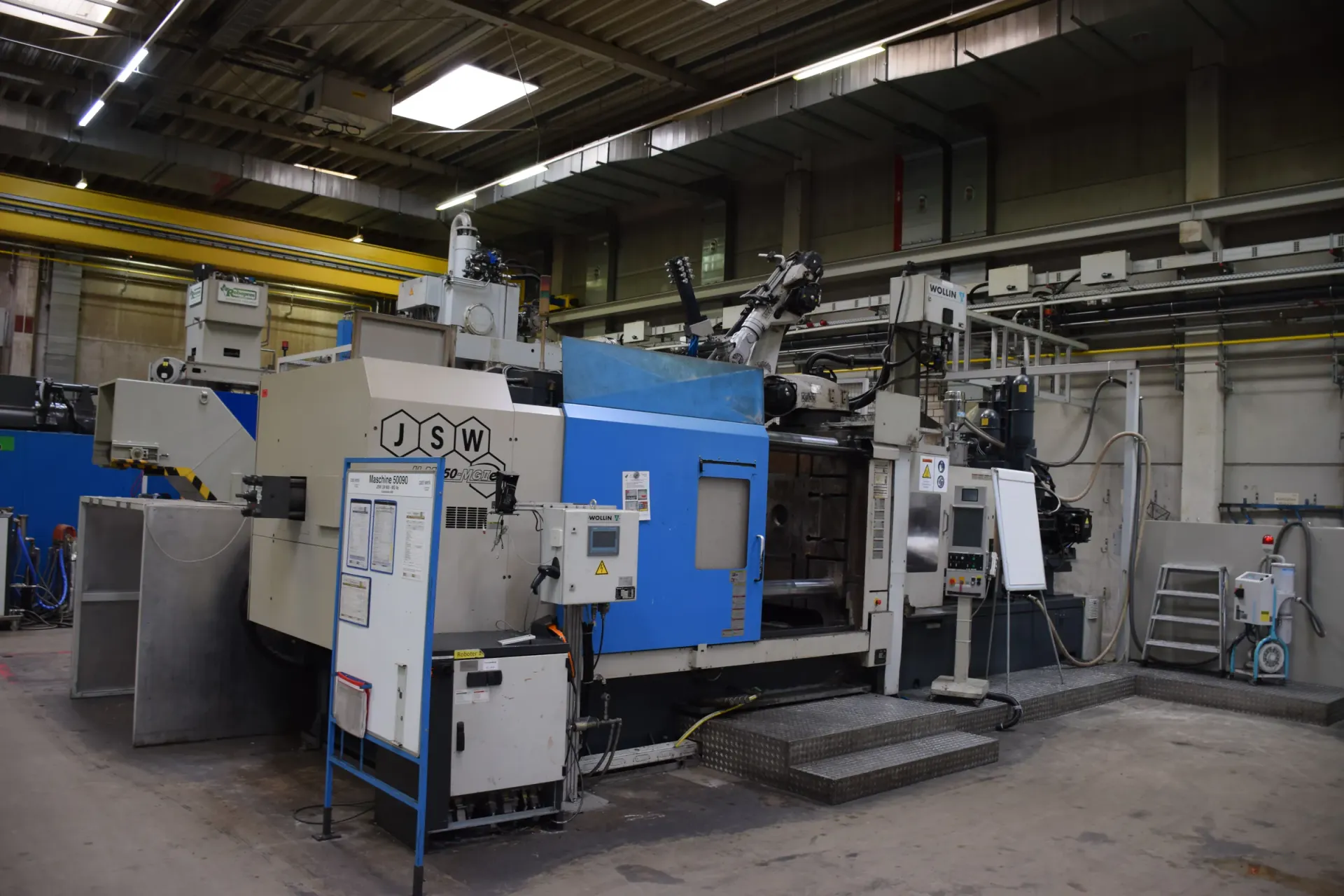
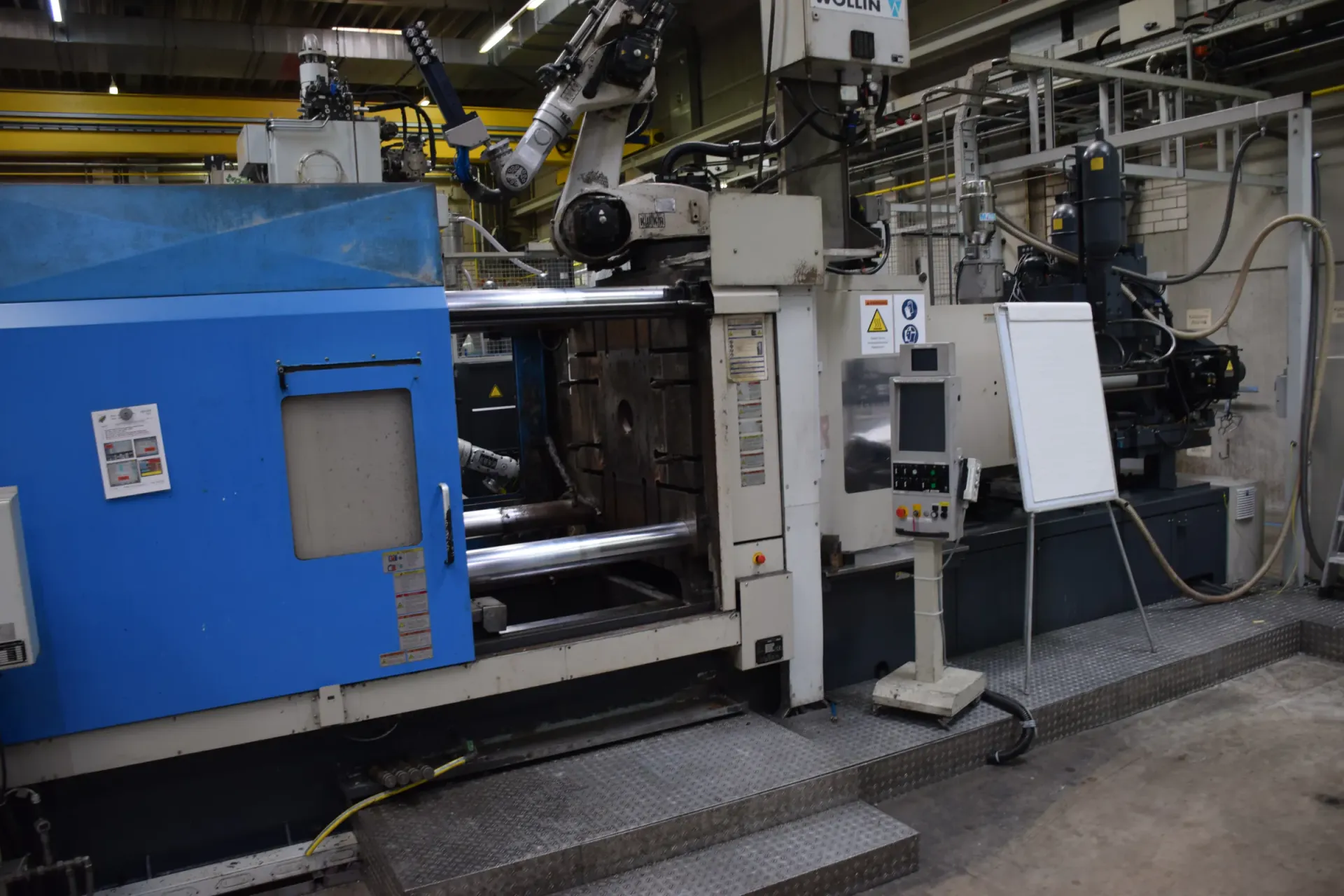
Photos: FISS Machines, thixomolding cell with a JSW JLM650-MGIIe (2026).
